
Network switches rarely make headlines, and that is part of the problem. They sit in cupboards, get set up once and are left alone for years. A new advisory from Zyxel is a reminder of why that habit is risky. The company has fixed a flaw in its GS1900 series switches that attackers reportedly used to compromise nearly 1,000 devices, and the earlier patch for what looked like the same problem did not stop it. This guide explains what was published, which models are affected and what a small business should do. It does not describe how to exploit anything, and we have not tested the flaw.
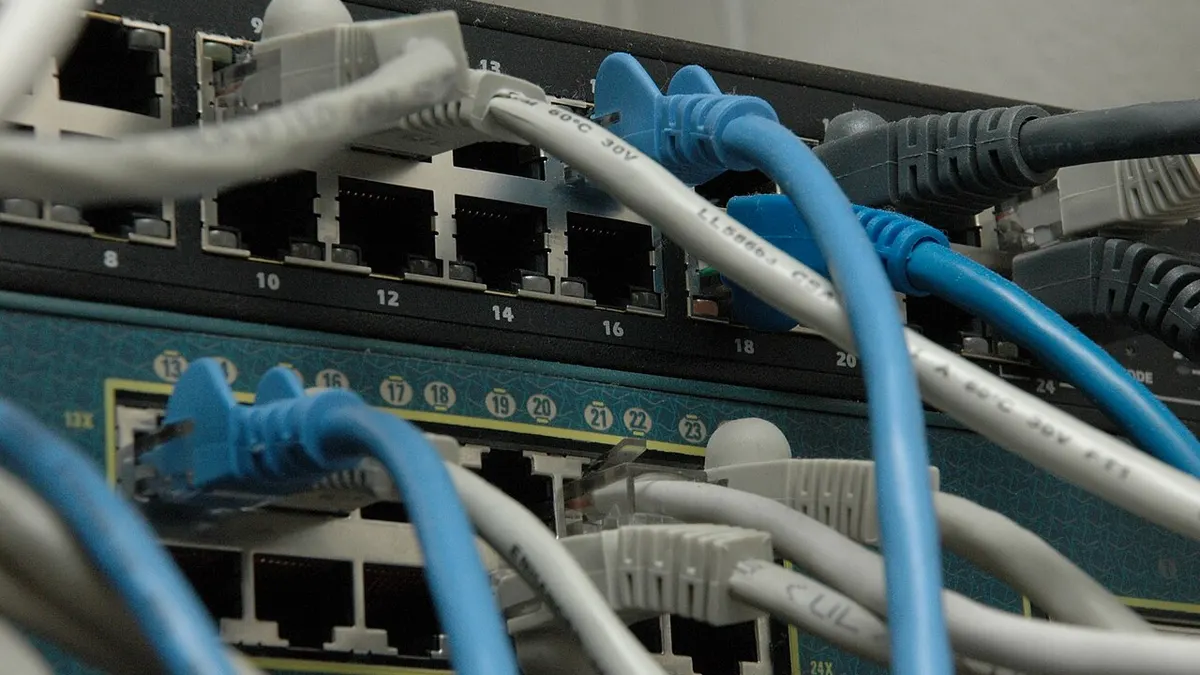 Switches hold the keys to a network, but their admin pages are often forgotten. Photo: ShakataGaNai, CC BY-SA 3.0, via Wikimedia Commons
The short answer
- Flaw: CVE-2026-107441, an out-of-bounds write in the CGI program of GS1900 switch firmware.
- Impact: per Zyxel, a LAN-based, unauthenticated attacker could potentially execute OS commands via a crafted HTTP request.
- Advisory: Zyxel published it on 3 November 2026. BleepingComputer reports the firmware updates were released on 22 October.
- Models: GS1900-8, 8HP, 10HP, 16, 24, 24E, 24EP, 24HPv2, 48 and 48HPv2.
- Fix: the matching
.3firmware build, for example 2.90(ABTQ.3)C0 for the GS1900-48HPv2. - Twist: the earlier June patch for CVE-2026-7273 did not stop the exploit, according to Binarly as reported by BleepingComputer.
What was published
Zyxel's advisory describes the flaw plainly. The CGI program in the switch firmware writes data outside the memory it should, and a crafted HTTP request could lead to operating system commands being executed. Zyxel says a LAN-based, unauthenticated attacker could do this. The advisory credits Yegor Vasilenko of Binarly and lists the affected versions for each model. Zyxel notes that on-market products not in its table remain unaffected.
BleepingComputer's report adds the history. Zyxel released an update on 16 June 2026 for CVE-2026-7273, a pre-authentication buffer overflow in the same switches. From around 17 August, GreyNoise saw a suspected Chinese-speaking actor, tracked as Kapibala, compromise 996 switches in 48 countries. The actor ran commands, then downloaded a script that collected device configuration, hashed root credentials and network information. When GreyNoise disclosed this on 21 September, it attributed the attacks to CVE-2026-7273, and CISA added that flaw to its Known Exploited Vulnerabilities catalog the same day.
Binarly then analysed an exploit it found while researching the actor's infrastructure. It reported that the exploit checked for firmware versions patched for CVE-2026-7273 and still worked on all ten of those releases, because the earlier fix could be bypassed by corrupting a parameter counter before it was checked. Binarly told Zyxel on 29 September, and Zyxel confirmed a new flaw on 11 October and assigned CVE-2026-107441. The October firmware limits parameter sizes and validates the parameter count before copying data. It remains unclear, BleepingComputer says, whether the exploit was built to get around the earlier patches or took advantage of a related bug those patches missed.
One difference in wording is worth noting. Zyxel says the attacker is LAN-based. BleepingComputer says an attacker with network access. In practice, the first thing to check is who can reach the switch's web page.
Why this matters even if you only own a few switches
A switch is not just a box of ports. Its configuration can describe your network layout, VLANs and management addresses, and its credentials are often reused elsewhere. The reported attacks collected exactly that: configuration, hashed root credentials and network information. An attacker who has it can plan the next step with a lot less guesswork.
Three lessons stand out for a small business:
- A patch label is not proof of a fix. Many owners will have updated in June and moved on. The October build is a second update for the same family of problems.
- Management pages are the doorway. Most switch flaws are reached through the web interface. If that interface is on the same network as guest Wi-Fi or ordinary desktops, it is within reach.
- Forgotten hardware is the risk. Few small offices track firmware on switches, printers and access points.
What to do this week
- Find every Zyxel switch. Look for GS1900 series labels, and ask your IT provider or building manager. Note each model and the firmware version shown in the web page or label.
- Compare with Zyxel's table. Any build ending
.2or earlier for your model is affected. The fix is the matching.3build. - Update the firmware. Download it from Zyxel's own support pages, follow the vendor steps and confirm the version afterwards. Schedule a short maintenance window because switches restart.
- Move the admin page. Put switch management on its own network or VLAN and allow access only from named administrator addresses. Do not expose it to the internet.
- Change administrator credentials. Use unique, strong passwords for every switch and remove default or shared accounts.
- Save and review the configuration. Keep an off-device backup and compare the running configuration against it for unexpected changes.
- Assume exposure if it was reachable. If a GS1900 was reachable from untrusted networks before updating, treat its configuration and credentials as potentially seen and rotate anything reused elsewhere.
- Look at the rest of the closet. Apply the same questions to firewalls, access points and other management consoles. Our posts on Barracuda appliance admin pages and SonicWall's unpatched GMS flaws cover the same habits.
If you would like a simple internal dashboard that tracks device models, firmware versions and update dates across your network, our custom software development service can build one, and you can talk to our team.
A decision guide
| Situation | What to do |
|---|---|
| You do not use Zyxel GS1900 switches | Nothing for this CVE. Still list your network devices and their firmware. |
GS1900 on a .2 build or earlier |
Update to the .3 build for your model as soon as you can. |
| Updated in June only | Update again to the October .3 firmware. |
| Switch admin page reachable from guest or user networks | Move it to a management network before or at the same time as the update. |
| Switch was exposed to the internet | Update, rotate credentials and get a professional to review the network. |
Common mistakes to avoid
- Treating June as done. The first patch did not stop the exploit according to Binarly.
- Updating but leaving the admin page open. A firmware fix does not remove the need for access limits.
- Reusing switch passwords. Hashed credentials were reportedly collected, so reuse widens the damage.
- Not recording versions. Without a list, the next advisory starts from zero again.
- Waiting for a scanner. Scanning tools may not understand a firmware family quickly. Check models by hand.
- Overstating the facts. It is reported that attackers compromised 996 switches, and that figure comes from GreyNoise via BleepingComputer, not from Zyxel.
Checklist for your team
- List every Zyxel switch with its model and firmware version.
- Compare each against the ten GS1900 models in Zyxel's advisory.
- Install the
.3firmware build for each affected model. - Confirm the new version after the restart.
- Move switch management to a separate network and limit who can reach it.
- Rotate administrator passwords and remove shared accounts.
- Back up the configuration and compare it for unexpected changes.
- Rotate any credentials that were stored on or reused from an exposed switch.
- Add network device firmware to your regular update calendar.
Key takeaways
- CVE-2026-107441 affects ten Zyxel GS1900 switch models and is fixed in matching
.3firmware builds. - The June patch for CVE-2026-7273 did not stop the exploit, so a second update is needed.
- It is reported that attackers compromised 996 switches in 48 countries and collected configuration and hashed credentials.
- Keep switch admin pages on a restricted management network.
- Keep a firmware list for every network device you own.
Sources
- Zyxel Community: Security advisory for out-of-bounds write vulnerability in GS1900 series switches, CVE-2026-107441 (3 November 2026)
- BleepingComputer: Zyxel fixes zero-day exploited to hack nearly 1,000 network switches (4 November 2026)
- Zyxel Networks: Security Advisories
- Zyxel advisory for CVE-2026-7273, stack-based buffer overflow in GS1900 series switches (16 June 2026)