
Most security advice is about installing the next update. This case is different. SonicWall has told customers that two vulnerabilities in its Global Management System (GMS) will never get a fix, because the product has reached end of life. That leaves one honest option: reduce exposure now and move to a supported product. This guide explains what was published, what an unpatched management console puts at risk, and a practical plan for a small or mid-size business. It does not describe how to exploit anything, and we have not tested the flaws.
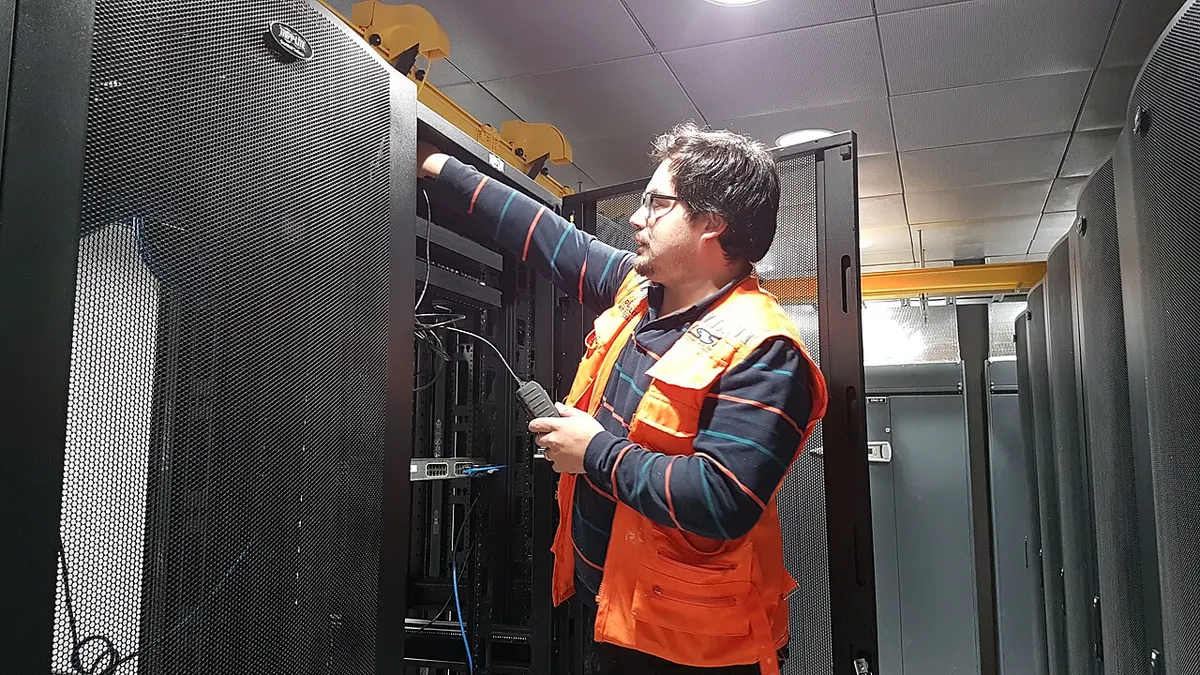 Management consoles live on servers that hold the keys to many devices. Photo: Rubin Observatory/NSF/AURA, CC BY 4.0, via Wikimedia Commons
The short answer
- Advisory: SonicWall SNWLID-2026-0019, first published 3 November 2026.
- Flaw 1: CVE-2026-109593, an unauthenticated file read in end-of-life GMS, CVSS 9.1 (vector
AV:N/AC:L/PR:N/UI:N). An attacker with network access may be able to read internal GMS files. - Flaw 2: CVE-2026-109594, an authenticated SQL injection, CVSS 6.8. In specific conditions an attacker who is already logged in could access or modify data in the GMS database.
- Affected: GMS Virtual Appliance and Windows, version 9.5.2 and earlier.
- Fix: none. The advisory lists no workaround and says no fix version is available because the product is end of life.
- Vendor guidance: upgrade to SonicWall Network Security Manager (NSM).
What the advisory says
SonicWall describes the first flaw as a failure to fail securely. A request that should be refused can instead return internal files. The advisory's wording is cautious: an unauthenticated attacker with network access "may be able to read internal GMS files, potentially exposing sensitive information". The score of 9.1 reflects that no login is needed and that confidentiality and availability are both rated high in the vector.
The second flaw is rated lower because it needs an administrator login first. The advisory says the weakness could, in specific conditions, let an authenticated attacker access or modify information stored in the GMS database. It matters mainly as a second step after an account has been stolen or misused.
The researchers credited are Matei Badanoiu and Andrei Lungu of Pentest-Tools.com. The Hacker News reports SonicWall's alert as saying that no remediation or security update will be released and that organisations should be aware of the risks of staying on the product.
Why an unpatched management console is a bigger deal than it looks
GMS is a central console. It exists to manage firewalls and other SonicWall devices from one place, which means it holds configuration, logs and, in many setups, credentials or settings for many devices. Files on that server can therefore be more valuable than the files on any single firewall. An attacker who reads them does not need to attack each device.
Three things make end-of-life software risky in general:
- The window never closes. A normal bug is open from disclosure until you patch. Here the window stays open for as long as the product is in use.
- Disclosure helps attackers more than defenders. Once a flaw is public and unfixable, anyone studying it knows it will work on every remaining install.
- Related products are under attack. The Hacker News reports that a different SonicWall flaw, CVE-2026-102255 (CVSS 10.0, a pre-authenticated server-side request forgery), has since been exploited, citing telemetry from Previdian that recorded 2,541 attack attempts from eight unique IP addresses since 9 October 2026, with up to 30 attempts on 3 November. That is a different product and bug, but it shows that SonicWall systems get attention from attackers.
SecurityOnline reports that, at the time of its article, there was no confirmed exploitation of the two GMS flaws and no public exploit code. Treat that as a snapshot, not a guarantee.
What to do this week
You cannot patch, so you reduce exposure and plan the replacement.
- Find out if you run GMS. Many small businesses do not manage this themselves. Ask your IT provider or whoever set up the firewalls. Check the console version. Anything at 9.5.2 or earlier is covered.
- Take the console off the internet. If the web interface answers on a public address, change that first. Put it behind a VPN or a management network, or allow only named IP addresses.
- Limit who can reach it internally. Network access is all CVE-2026-109593 needs, so segment the console from ordinary user networks and guest Wi-Fi.
- Reduce what a file read would reveal. Rotate administrator passwords and any shared secrets or API keys the console stores, remove unused admin accounts and turn on two-step sign-in wherever the product supports it.
- Back up the configuration off the console. You will need it for the migration, and a recent copy helps if the host has to be rebuilt.
- Turn on and read the logs. Look for unfamiliar admin sign-ins, unexpected configuration changes and unusual requests to the console. If you see anything odd, treat it as an incident and involve a security professional.
- Schedule the move to NSM. SonicWall points customers to Network Security Manager. Confirm licensing, feature coverage and a cutover plan with your reseller, and set a date rather than a vague intention.
If you want a second pair of eyes on the surrounding setup, our custom software development service can fit a review of management tools and access paths into a wider project, and you can also talk to our team.
A decision guide
| Situation | What to do |
|---|---|
| You do not use GMS | Nothing for these CVEs. Still list your network management tools, because the same end-of-life question applies to them. |
| GMS is reachable from the internet | Remove that exposure today, then plan the migration. This is the highest-risk case. |
| GMS is internal only | Restrict access to a management network, rotate credentials, migrate on a firm schedule. |
| You cannot migrate soon | Isolate the host, monitor it closely and document the risk acceptance with a date to revisit. |
| Someone else manages it for you | Ask them in writing for the GMS version, where it is reachable from and when the move to NSM will happen. |
Common mistakes to avoid
- Waiting for a patch. SonicWall has said none will be released. Waiting only extends the exposure.
- Assuming "internal" means safe. CVE-2026-109593 needs only network access. Any compromised laptop on the same network could reach an unprotected console.
- Keeping the old host "just in case". An unused but still running GMS server is still a target. Switch it off after the migration and keep only a protected configuration backup.
- Treating the lower score as ignorable. The SQL injection needs a login, but stolen or reused admin passwords are common. Rotate credentials.
- Migrating without a rollback plan. Keep the old configuration backup and a tested way to restore firewall management if the cutover hits a problem.
- Forgetting other end-of-life items. The same issue applies to old firewalls, routers, VPN appliances and server software. Our post on Barracuda appliance admin pages covers the admin-page habits, and the Cisco ASA update guide shows the same routine for another vendor.
Checklist for your team
- Confirm whether any SonicWall GMS console is in use and note its version.
- Read SonicWall advisory SNWLID-2026-0019.
- Remove any internet exposure of the GMS web interface.
- Restrict access to a management network, VPN or named IP addresses.
- Rotate admin passwords and any secrets stored in the console.
- Turn on two-step sign-in and remove unused admin accounts.
- Take an off-device backup of the GMS configuration.
- Review logs for unfamiliar sign-ins and configuration changes.
- Agree a dated plan to move to Network Security Manager.
- List every other end-of-life product on your network.
Key takeaways
- SonicWall will not fix CVE-2026-109593 (CVSS 9.1) or CVE-2026-109594 (CVSS 6.8) in GMS 9.5.2 and earlier, because the product is end of life.
- The advisory lists no workaround, so the only real fixes are to restrict access in the meantime and migrate to NSM.
- A management console holds the keys to many devices, which is why a file read on it is more serious than it sounds.
- Public reporting at the time of writing did not confirm exploitation of these two flaws, but another SonicWall flaw was reported as exploited.
- Treat end-of-life software as a standing risk, and put replacement dates on your asset list.
Sources
- SonicWall PSIRT: End-Of-Life (EOL) SonicWall GMS Multiple Vulnerabilities, SNWLID-2026-0019 (3 November 2026)
- The Hacker News: SonicWall Won't Patch EoL GMS Flaws That Could Expose Files, Alter Database Records (4 November 2026)
- SecurityOnline: Critical Unpatched SonicWall GMS Vulnerabilities Disclosed (3 November 2026)
- CVE.org record for CVE-2026-109593