Many small offices let staff work from home through a SonicWall firewall, and many of them have since added single sign-on so people use one company login instead of a separate VPN password. That is exactly the setup a new SonicWall advisory is about. On 6 November 2026 SonicWall published advisory SNWLID-2026-0014, and one of its seven flaws, CVE-2026-19868, can let someone skip the SAML sign-in step on the SSLVPN service. CISA added it to its exploited list the same day. We have not tested the flaw and this article leaves out how to trigger it.
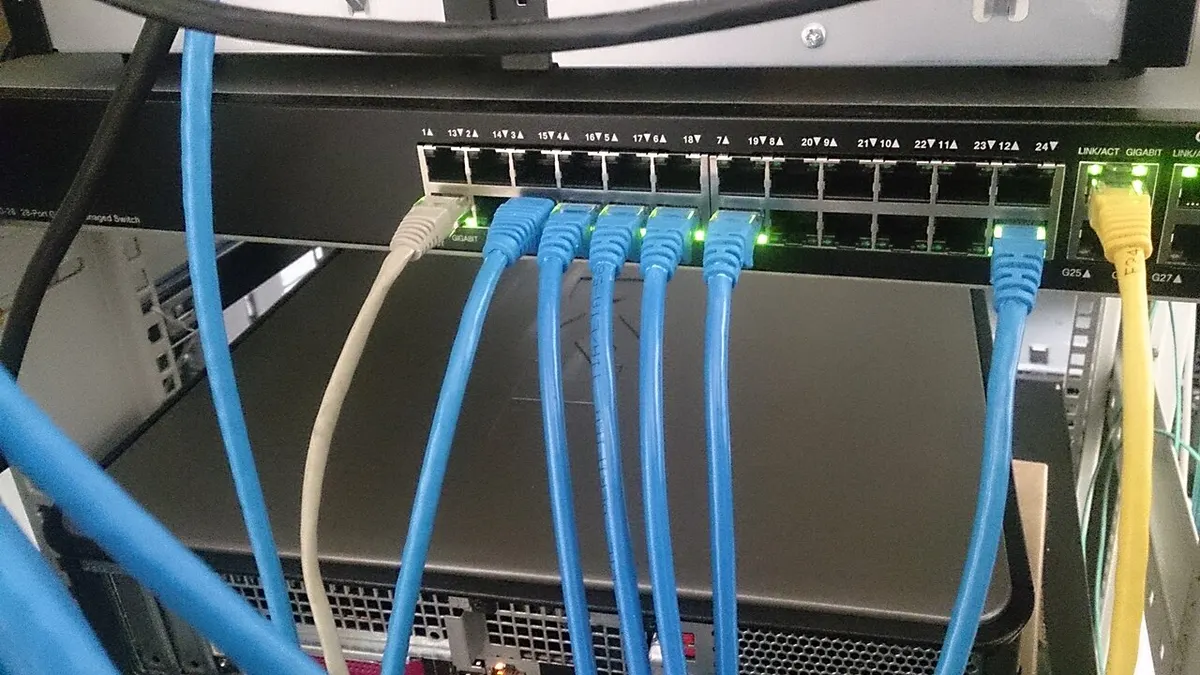 A firewall's VPN is the front door to the office network, so how it signs people in matters. Photo: ProjectManhattan, CC BY-SA 3.0, via Wikimedia Commons
The short answer
- What it is: an authentication enforcement flaw in the SonicOS SSLVPN service, CVE-2026-19868, weakness type CWE-308 (use of single-factor authentication).
- The effect: a user with valid credentials for an alternate authentication method may be able to bypass SAML authentication controls, and may also bypass SAML-enforced MFA.
- Who is affected: only SSLVPN setups where SAML is enabled for logins, on Gen7 firmware 7.3.3-7015 and older or Gen8 firmware 8.2.2-8015 and older, per SonicWall.
- Exploitation: SonicWall PSIRT investigated a report of potential exploitation, and CISA lists the flaw in its Known Exploited Vulnerabilities catalog with a due date of 20 November 2026.
- Fix: SonicOS 7.3.4-7013 and higher, or 8.2.3-8015 and higher. SonicWall lists no workaround.
What the sources say
SonicWall's advisory describes CVE-2026-19868 as an SSLVPN authentication enforcement vulnerability via alternate authentication methods. A user who holds valid credentials for some other sign-in method on the firewall may be able to get past the SAML controls, and successful exploitation may also bypass SAML-enforced MFA. SonicWall adds an important note: the flaw only impacts the SSLVPN interface or service if SAML is enabled for SSLVPN logins. It scores the flaw CVSS 7.1 and marks the advisory as potentially exploited, saying its PSIRT investigated a report indicating potential exploitation and strongly urging customers to upgrade as soon as possible. The finder is credited as Ryan Harris of The Electronic Office.
CISA's catalog entry, added on 6 November 2026, names it "SonicWall SonicOS SSLVPN Use of Single-factor Authentication Vulnerability" and lists a due date of 20 November 2026. Its required action is to apply mitigations in line with the vendor's instructions and CISA's BOD 26-04 guidance, or to discontinue use of the product if mitigations are unavailable. It lists known ransomware campaign use as unknown and forensic triage as not required. The NVD entry, which was still awaiting its own assessment when we read it, repeats the description and lists the affected versions.
The same advisory covers six other issues, so check whether any apply to your devices:
- Management interface issues (CVE-2026-107155 and CVE-2026-107154). Both rated 8.8, they concern a permissive cross-domain policy and session validation in the SonicOS management interface, and in specific conditions could allow a remote unauthenticated attacker to perform unauthorized operations.
- SSL-VPN pre-authentication heap overflow (CVE-2026-82308). Rated 7.5, it could cause an application-level denial of service.
- Two TACACS+ client overflows (CVE-2026-77708 and CVE-2026-77709). Both rated 5.9, they could cause denial of service in specific conditions.
- Weak password hashing on virtual appliances (CVE-2026-19703). Rated 5.2, it needs existing local access and could disclose a platform credential with access to a limited subset of settings.
SonicWall states there is no workaround for any of them in this advisory. We could not find an independent report of attacks against CVE-2026-19868 when we looked, so what is known about exploitation comes from SonicWall and CISA only.
Why this matters even though it needs SAML
Some owners will read "only if SAML is enabled" and relax. Look at it from the other side. SAML sign-in with MFA is the setup that businesses adopt to make remote access safer, and a flaw that lets a second login method route around it removes the benefit of that investment. If your team uses SAML for VPN logins, you are in the affected group by definition. The weakness also depends on the attacker holding valid credentials for another sign-in method, which makes stolen or reused passwords from earlier breaches more valuable. Our post on the DreamHost breach and password resets covers the habit that reduces that risk.
If you run an older SonicWall appliance that no longer gets updates, the lesson is more severe. We covered one such case in our post on the SonicWall GMS end-of-life flaws with no patch.
What to do this week
- Find your SonicWall devices. Include branch offices and any firewalls managed by a vendor or IT provider.
- Check whether SAML is on for SSLVPN. If it is not, this flaw does not apply to that service, but the other CVEs in the advisory may.
- Check your firmware version. The affected builds are 7.3.3-7015 and older on Gen7 and 8.2.2-8015 and older on Gen8.
- Upgrade. Move to 7.3.4-7013 or higher on Gen7, or 8.2.3-8015 or higher on Gen8. Take a configuration backup first and schedule a short outage.
- Review SSLVPN logs. Look for sign-ins that do not match your staff list, odd hours, new locations, and logins that appear without the usual SAML step.
- Reset exposed credentials if anything looks off. Change passwords for affected users and any local firewall accounts, and review which alternate sign-in methods are enabled.
- Remove sign-in methods you do not use. Fewer alternate paths means fewer routes around SAML.
- Restrict management access. Keep the SonicOS management interface off the public internet.
- Record the work. Note the date, version and who did the upgrade, in case you need to show it later.
- Get help if you manage this alone. Our custom software development team can help plan network access and VPN reviews, and you can talk to us.
Common mistakes to avoid
- Assuming MFA means safe. This flaw is about getting around the SAML step, so an MFA setup is not proof of protection until the firmware is fixed.
- Skipping the upgrade because "we only have a few users". CISA lists the flaw as exploited, and size is not a filter.
- Not checking who manages the firewall. If a vendor handles it, ask for the version in writing.
- Looking only at CVE-2026-19868. The advisory lists six other issues, and the same upgrade covers them.
- Waiting for a workaround. SonicWall states there is none.
Checklist
- List every SonicWall firewall and who manages it.
- Confirm whether SAML is enabled for SSLVPN logins on each.
- Record each firmware version against the 7.3.3-7015 and 8.2.2-8015 cut-offs.
- Back up the configuration before upgrading.
- Upgrade to 7.3.4-7013 or higher (Gen7) or 8.2.3-8015 or higher (Gen8).
- Review SSLVPN login logs for unfamiliar users, times and locations.
- Change passwords for any user you cannot account for.
- Disable alternate sign-in methods you do not need.
- Confirm the management interface is not reachable from the internet.
- Note the upgrade date before CISA's 20 November due date.
Key takeaways
- CVE-2026-19868 can let a user with valid credentials for an alternate method bypass SAML sign-in and SAML MFA on SonicOS SSLVPN, but only where SAML is enabled for SSLVPN logins.
- SonicWall PSIRT investigated a report of potential exploitation, and CISA lists the flaw as exploited with a 20 November 2026 due date.
- Fixed versions are 7.3.4-7013 and higher (Gen7) and 8.2.3-8015 and higher (Gen8), and there is no workaround.
- The same advisory fixes six other flaws, so one upgrade covers all of them.
- We found no independent attack report, so rely on SonicWall and CISA for exploitation status and recheck as details emerge.