
File transfer servers hold the documents companies least want to lose: contracts, source files, media, financial exports. That is why a flaw in one deserves quick attention. On 9 November 2026 the US cyber agency CISA added a critical flaw in IBM Aspera Faspex to its Known Exploited Vulnerabilities (KEV) list, with a due date of 12 November for US federal agencies. IBM's own bulletin offers no workaround, only an upgrade. We have not tested the flaw and this article leaves out how it works beyond what IBM and CISA published. It is a patching and review guide for the people who run or depend on Faspex.
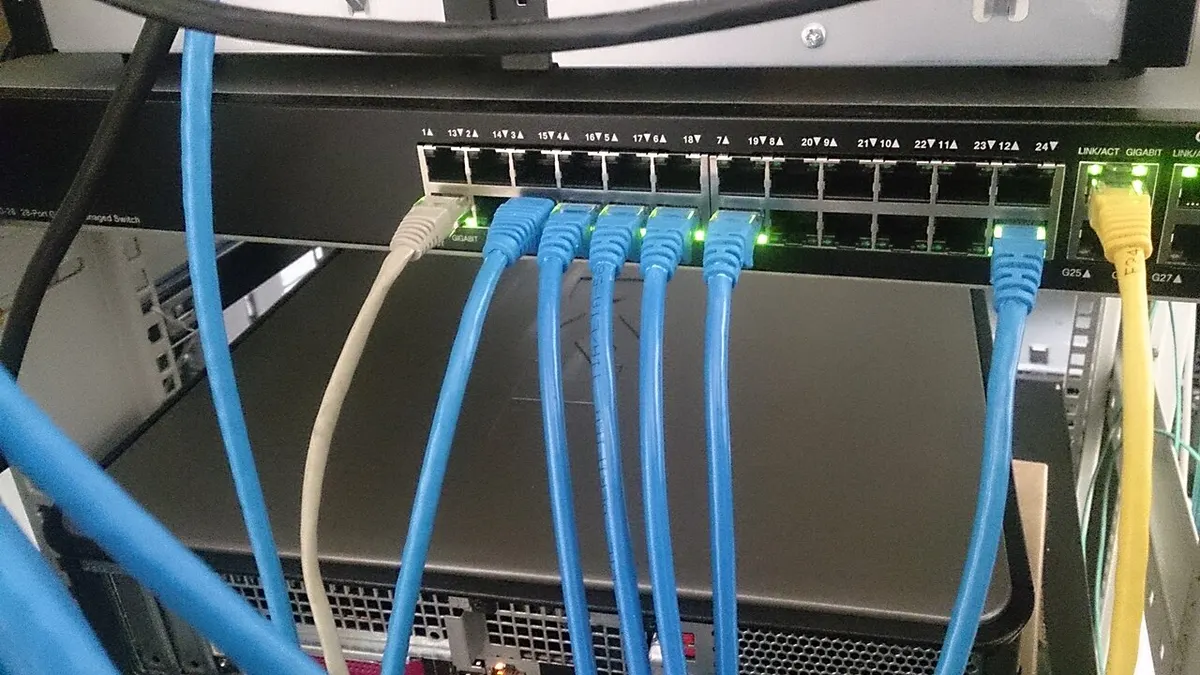 File transfer servers sit on the network edge, so an authorization flaw there is a business risk, not an IT footnote. Photo: ProjectManhattan, CC BY-SA 3.0, via Wikimedia Commons
The short answer
- What it is: CVE-2026-123218, an incorrect authorization flaw (CWE-863) in IBM Aspera Faspex 5.
- Severity: IBM scores it 9.8 out of 10 (CVSS 3.1, network access, low complexity, no user interaction).
- Affected versions: 5.0.0 through 5.0.19, per IBM and the NVD.
- Fix: Aspera Faspex 5.0.19 Patch Level 1 (Linux). IBM lists workarounds and mitigations as none.
- Exploited: CISA added it to KEV on 9 November 2026. IBM's bulletin, published on 7 November, does not state exploitation.
- Impact: an attacker who can send a crafted message can gain full administrative privileges, according to IBM.
What the sources say
IBM published a security bulletin on 7 November 2026 titled "IBM Aspera Faspex has addressed a vulnerability that could allow authorization bypass". It describes CVE-2026-123218 as a flaw in which an authorized user can craft a specific message to bypass user authorization and gain full administrative privileges. The NVD record, published on 6 November and still awaiting its own enrichment, repeats that description and lists affected versions as 5.0.0 up to and including 5.0.19. IBM's vector (network, low complexity, no privileges required, no user interaction) gives the 9.8 score.
There is a wrinkle worth noting. IBM's summary says "an authenticated user", and the vector says no privileges are required. The sources do not explain how those fit together, and we are not going to guess. The practical reading is that you should assume a low-privileged account, or possibly worse, is enough, and treat the server as reachable by anyone who has any foothold.
CISA's entry is titled "IBM Aspera Faspex Incorrect Authorization Vulnerability". It was added on 9 November 2026 with a due date of 12 November and marks known ransomware campaign use as unknown. CISA's description says an authenticated user could craft a specific message to bypass authorization and cause privilege escalation. The notes link to IBM's bulletin and the NVD page.
What we could not confirm: who is exploiting the flaw, how many servers are affected, or whether exploitation needs an account. IBM's bulletin does not give a reporter or credit.
Why this matters even if you are not a large enterprise
Aspera Faspex is a web application for sending and receiving large files, used by media companies, research groups, healthcare providers, engineering firms and others who exchange files too big for email. Many such organisations run it themselves, often with a small team, and often with the server reachable from the internet so partners can upload and download.
Administrator rights on a file exchange platform are valuable. An admin can typically see shared packages, add or change users, alter settings and create access for others. For a company that exchanges client drawings, patient files or financial exports, that means confidentiality, and sometimes legal duties to notify. If your team is in India and handles data from US or EU clients, a contractual or regulatory obligation may follow a confirmed exposure, so it is worth knowing early.
Because IBM lists no workaround, there is no configuration change that buys time. The only complete remedy is the patch, which makes speed and good housekeeping afterwards the two things you control.
What to do this week
- Find your Faspex servers. Include test and staging instances and any run by a department or an agency for you. Check the version in the admin console or your deployment records.
- Apply 5.0.19 Patch Level 1. Follow IBM's fix instructions, then confirm that the faspex-core container image shows 5.0.19 with fix pack 1, as the bulletin describes. Test uploads and downloads afterwards.
- Reduce exposure while you schedule the change. If the server does not need to be open to the whole internet, restrict access to partner addresses or put it behind a VPN or access proxy. This lowers risk but, as IBM says, does not replace the patch.
- Review administrators. List every account with admin rights and remove any you cannot explain. Look for accounts created or changed recently, especially from 6 November onward.
- Review activity. Check logs for unusual administrative actions, new users, changed permissions, new shared inboxes and unfamiliar downloads. CISA's entry notes that forensic triage is expected, so keep logs and snapshots before you rebuild anything.
- Rotate credentials where warranted. If you see signs of misuse, reset administrator passwords and API or integration credentials, and review any automated transfers.
- Tell the right people. If sensitive data may have been viewed, involve your security contact, and your legal or compliance lead if client or personal data is involved.
- Ask your suppliers. If a vendor shares files with you through Faspex, ask in writing whether they have applied the fix.
Common mistakes to avoid
- Waiting for a workaround. IBM says there is none. Delay only extends exposure.
- Patching and forgetting. The flaw leads to administrator access, so an attacker may already have left accounts or settings behind.
- Trusting the version number alone. IBM tells you to validate the container image, so check it rather than assuming the upgrade took.
- Forgetting forgotten servers. Old pilots and departmental installs are rarely patched and often hold real data.
- Relying on "only trusted users have accounts". The sources say an authorized user can reach admin rights, so a stolen or shared account matters.
- Ignoring supplier risk. Your files may sit on a partner's Faspex server, and their patch status affects you.
Where Susraj Tech fits in
We build custom software and integrations, including secure document and file workflows. If you want help reviewing how files move in and out of your business, or replacing a hand-built transfer process, our custom software development team can help, or you can reach out. Two earlier posts cover similar patch-then-review work: the SonicWall SSL VPN flaw on CISA's list and the cPGuard update compromise.
Checklist
- List every IBM Aspera Faspex server, including test and partner-run ones.
- Record each version and mark anything from 5.0.0 to 5.0.19.
- Apply Aspera Faspex 5.0.19 Patch Level 1 following IBM's instructions.
- Confirm the faspex-core container image shows 5.0.19 with fix pack 1.
- Restrict access to partner addresses or a VPN until the patch is in place.
- List all administrator accounts and remove any you cannot explain.
- Review logs since 6 November for new users, permission changes and unusual downloads.
- Rotate admin and integration credentials if you find signs of misuse.
- Involve security and compliance contacts if sensitive data may have been exposed.
- Ask suppliers who share files through Faspex to confirm their patch status.
Key takeaways
- CVE-2026-123218 is a critical authorization flaw (CVSS 9.8) in IBM Aspera Faspex 5.0.0 through 5.0.19 that can give full administrative privileges.
- CISA added it to KEV on 9 November 2026, with a due date of 12 November.
- IBM lists no workaround, so upgrading to 5.0.19 Patch Level 1 is the fix.
- Patching is not the end. Review admin accounts, logs and shared data for signs of misuse.
- The sources leave open how much access an attacker needs, so assume any account could be enough.
Sources
- IBM Security Bulletin: IBM Aspera Faspex has addressed a vulnerability that could allow authorization bypass (published 7 November 2026)
- NVD: CVE-2026-123218 (published 6 November 2026)
- CISA Known Exploited Vulnerabilities catalogue: CVE-2026-123218, IBM Aspera Faspex Incorrect Authorization Vulnerability (added 9 November 2026)