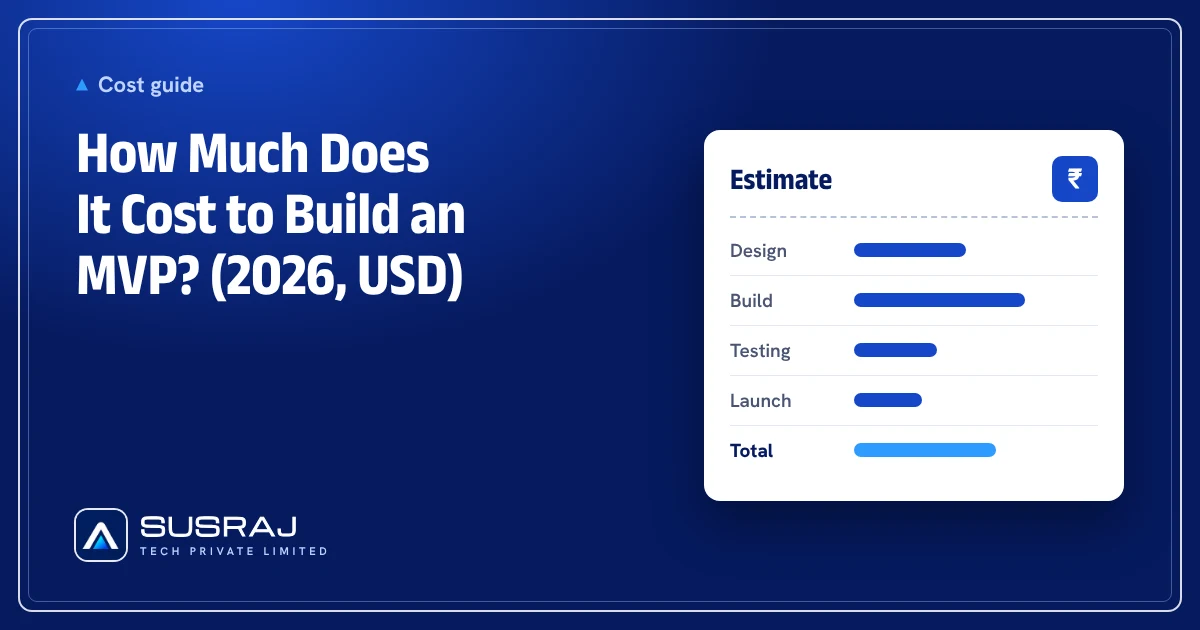
Before you hire a team, you need two numbers: what a first working version of your product will cost, and what you can leave out to keep it small. An MVP, or minimum viable product, is the smallest real product that lets genuine users do the core job and gives you data on whether they will use and pay for it. Here are realistic USD ranges for 2026, what moves the price and how to scope an MVP you can compare quotes for.
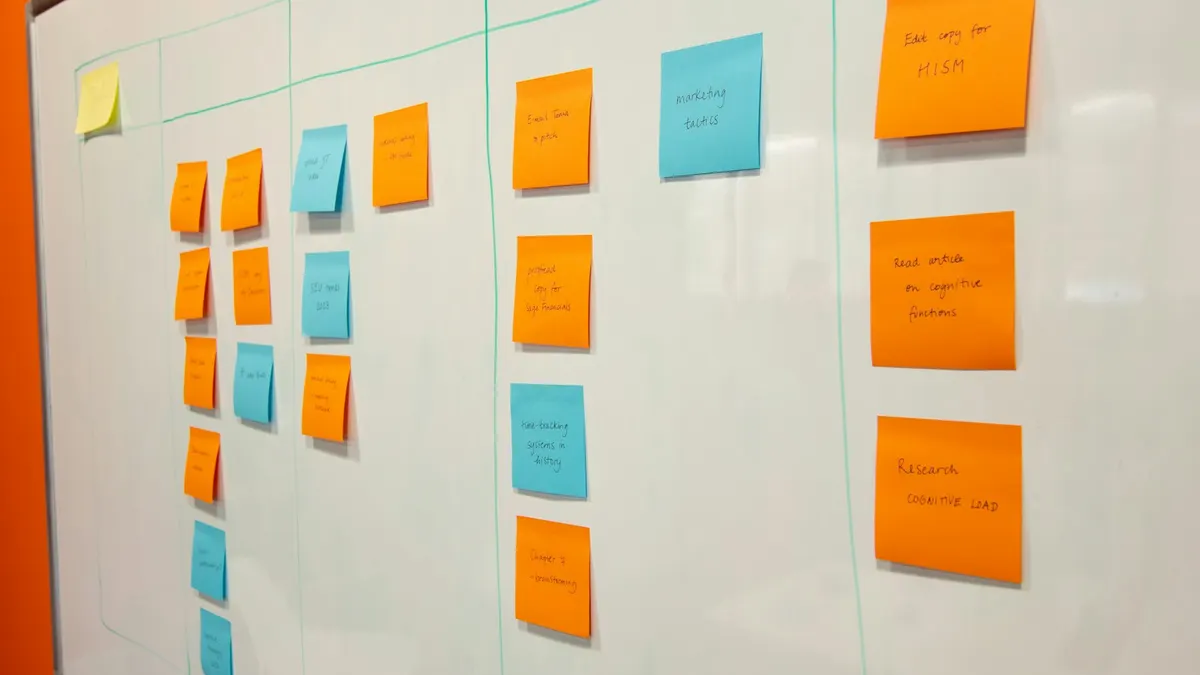 Most of an MVP's cost is decided on the whiteboard: every feature that stays on the list adds screens, testing and time. Photo: Paymo on Unsplash
The short answer
- A web app MVP with logins, roles and an admin panel typically costs $2,500 – $6,000 and takes about 3–4 weeks once the core flow is agreed.
- A mobile app MVP for Android and iOS, with a backend and store launch, typically costs $2,500 – $6,000 over a similar time.
- A landing page to test demand before you build costs about $250 – $500.
- Extra features such as payments, chat, maps or AI add cost and time, and marketplaces are priced from a written scope.
These are indicative prices for a fixed-scope build, not a quote. They match the ranges our quick estimate on the home page shows US visitors, and our app cost calculator and website cost calculator let you test your own feature list.
MVP cost at a glance
| What you build | What it includes | Typical price (USD) | Typical timeline |
|---|---|---|---|
| Validation landing page | One page explaining the offer, a sign-up or waitlist form and launch | $250 – $500 | About 1 week |
| Web app or SaaS MVP | Accounts, roles, the core workflow, dashboards and an admin panel | $2,500 – $6,000 | 3–4 weeks |
| Mobile app MVP, Android + iOS | The core flow in one cross-platform app, plus backend and store launch | $2,500 – $6,000 | About 3–4 weeks |
| MVP with extra features | Either of the above plus payments, chat, maps, AI or integrations | Priced from your feature list | Longer, by feature |
| Marketplace or on-demand MVP | Several sides (buyers, sellers or providers, admin) sharing live data | Priced from a written scope | Agreed in the scope |
The range is wide on purpose. The low end fits one user type, a short list of screens and a clean standard design. The high end fits more roles, more screens and more polish.
What you get for $2,500 – $6,000
An MVP in this range usually covers:
- Sign-up and login for your users, with password reset and basic profiles.
- The core flow: the one job your product exists to do, such as booking, ordering, submitting a request or tracking work.
- A backend: the server and database that store users and their data, and send confirmation emails.
- An admin view for you to see users, activity and records, and fix problems.
- Launch: hosting set up for a web app, or store listings and submission for a mobile app.
Our SaaS development cost guide goes deeper on subscription products, and the web application development cost guide covers portals and internal tools.
Test demand before you build
The cheapest MVP is sometimes no software at all. Before you spend $2,500 or more, you can check whether people want the product:
- A landing page that explains the offer and collects sign-ups costs about $250 – $500. If few visitors sign up, you have saved the build cost.
- A clickable prototype shows how the product will look and lets you watch real users try it before any code exists.
- A proof of concept answers whether a risky technical part can be built at all.
Our guide to MVP vs prototype vs proof of concept explains which one answers which question, and our landing page cost guide covers the first step in detail.
What changes the price
Number of user types
An MVP where only customers log in is the simplest. Every extra role, such as staff, providers, managers or partners, adds screens, permissions and testing. Two-sided products like marketplaces need separate flows for each side, which is why they are priced from a written scope.
Features
Each feature adds screens, backend logic and testing. In our pricing model, the features that add the most are AI features, video or audio calls, maps and live tracking, in-app chat and a full admin dashboard. Online payments, extra languages, analytics and third-party integrations add less, and push notifications are among the cheapest. Every app feature also adds about 6% to the timeline in our model, so a long feature list moves both the price and the launch date.
Web, mobile or both
Building a web app and a mobile app in the first version roughly means building two products. Pick the one where your first users already are. For a mobile app, our pricing model starts from one cross-platform codebase for Android and iOS; one platform only costs about 30% less, and two fully native apps about 70% more. Our guide to PWA vs native app covers the in-between option.
Design
A clean, standard interface is the cheapest and is usually right for an MVP. A custom-branded or animation-rich design costs more, and is easier to justify once users have shown they want the product.
Integrations and data
Connecting to payment processors, calendars, CRMs or your existing software adds build time for each connection. Importing existing customer data adds cleaning and testing. Read what API integration involves.
What you pay after launch
- Hosting for the app or web app, the backend and the database, which grows with users.
- Paid services you choose, such as email, SMS, maps or payment-processor fees on each transaction.
- App stores, if you launch a mobile app: Apple charges 99 US dollars a year and Google a one-time 25 US dollar registration fee.
- Maintenance: security updates, bug fixes and small changes. We estimate roughly 10–20% of the build cost a year for a web product and 15–20% for an app.
- New features that users ask for, which are the reason to build an MVP in the first place. Budget for a second round.
How to get a quote you can compare
- Write one sentence on the problem and who has it.
- Describe the one core flow your first users must complete, step by step.
- List the user types and what each one must be able to do.
- Split features into must-have for version one and later.
- Decide on web app or mobile app for the first version, not both.
- Ask each team for a fixed price for a fixed scope, with screens and features listed. Read fixed price vs time and materials.
- Confirm in writing that you own the code, the backend, the data and any store accounts. See who owns the code in an app development agreement.
- Ask what maintenance and a second round of features would cost.
Common mistakes to avoid
- Building the full product and calling it an MVP. If version one takes months, it is not minimal. Cut to the core flow.
- Skipping the demand test. A landing page or prototype can show whether anyone wants the product before you pay for the build.
- Web and mobile at once. Two products double the work before you know which one users prefer.
- No admin view. Without one, you cannot see what users do or fix their problems.
- No budget after launch. An MVP is the start of learning; plan for fixes and the features users ask for.
- Code or accounts in the developer's name. If the relationship ends, you can lose control of your own product.
For the full journey from idea to launch, read our SaaS MVP roadmap, and if you are comparing offshore teams, see how to hire Indian developers from the US.
Key takeaways
- A web app or mobile app MVP typically costs $2,500 – $6,000 with an experienced offshore team and takes about 3–4 weeks once the core flow is agreed.
- A validation landing page costs about $250 – $500 and can save the build cost if demand is weak.
- User types, features and choosing web, mobile or both move the price most.
- Marketplaces and on-demand products are priced from a written scope.
- Budget for hosting, paid services, maintenance and a second round of features.
Get a written quote
Susraj Tech builds MVPs for founders and businesses in the US, India and worldwide through our web app and SaaS development service and mobile app development service. Tell us about your product idea and we will send a free, written quote in USD with the scope, timeline and price.
Sources
- Apple: Apple Developer Program
- Google Play Console Help: Create and set up your developer account
- Susraj Tech pricing model in our app cost calculator, website cost calculator and the USD quick estimate on our home page.
Last reviewed 9 November 2026. Prices are indicative ranges, not a quote. Store fees can change, so confirm them in Apple's and Google's current documentation.